
Džambo Jozo
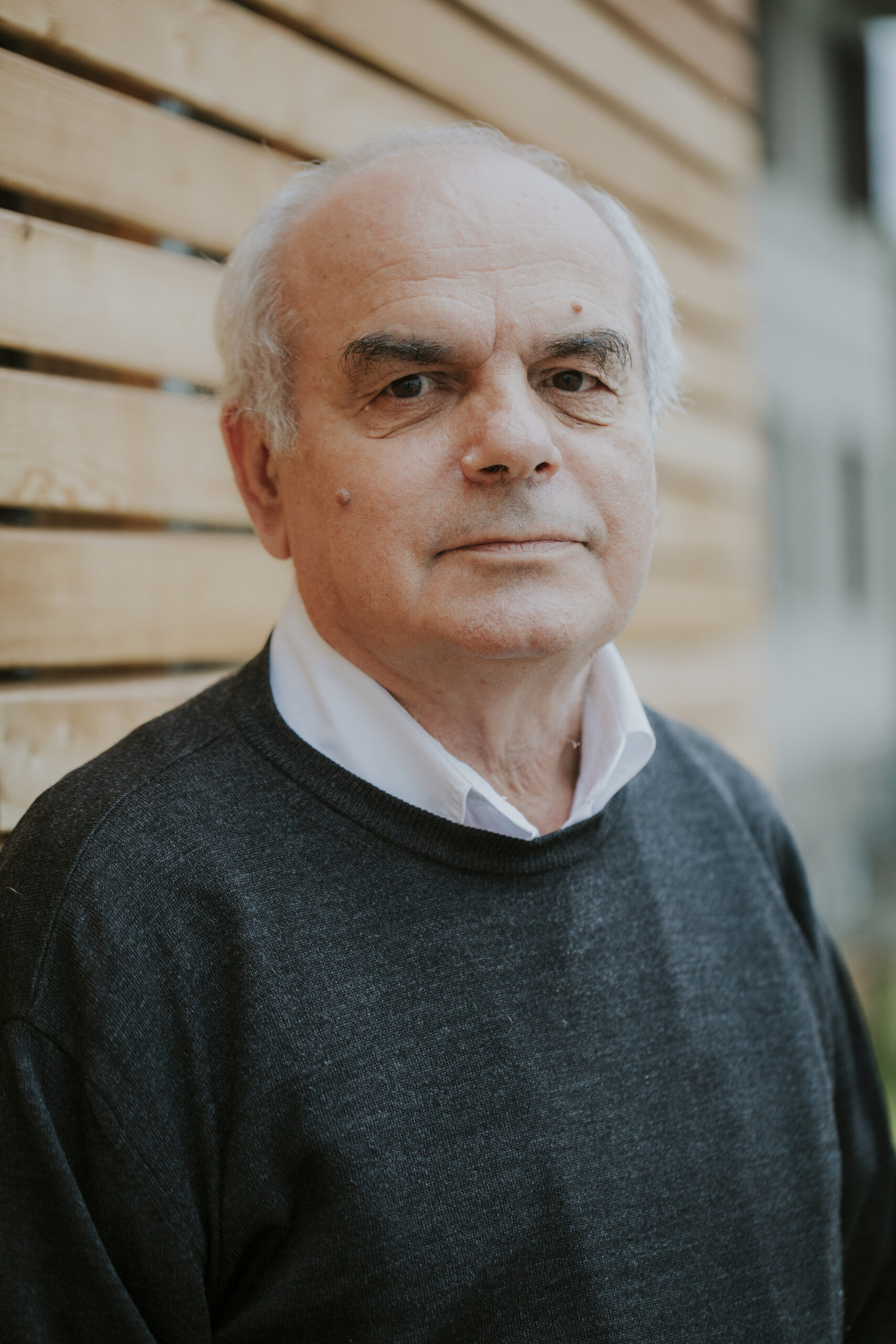
Date of birth:
- 12/9/1949
Place of birth:
- Matina near Maglaj
Džambo Jozo
Membership in Academy:
- corresponding member – Department of Social Sciences (5/21/2026 – …)
Curriculum Vitae
Jozo Džambo was born on 9 December 1949 in Matina near Maglaj, Bosnia and Herzegovina. He finished primary school in Novi Šeher in 1963 and graduated from the Franciscan Classical Gymnasium in Visoko in 1967. He went on to study philosophy and theology at the Franciscan Theology Faculty in Sarajevo from 1970 to 1972, followed by a year at the Gesamthochschule in Eichstätt, Bavaria, in 1972/73. He has lived in Germany since late 1972.
From 1973 to 1979, he read Slavic studies, the history of Southeast Europe, and Turkish philology at Ruhr University in Bochum, where he earned his master’s degree in 1979 with a thesis entitled Buchwesen in Bosnien-Herzegowina 1800–1878: Zum Problem der Lesersoziologie (Publishing in Bosnia and Herzegovina 1800–1878: On the Problem of the Sociology of Reading). He remained at the university as a research associate and assistant in the Department of Medieval History from 1979 to early 1983 and received his doctorate there in 1984 with a dissertation on Die Franziskaner im mittelalterlichen Bosnien (published in Croatian as Franjevci u srednjovjekovnoj Bosni, Sarajevo, 2022; English: The Franciscans in Medieval Bosnia). The dissertation was awarded the annual prize of the Southeast Europe Society.
From 1984 to 1986, he was a research associate at the Bavarian National Museum. Throughout the 1980s, he was also a long-standing contributor to WDR German radio. From 1987 to 1990, he participated in a German Research Foundation (DFG) project on popular literature in Southeast Europe at the University of Munich’s Department of Ethnology. In 1991, he was a freelance associate at the Südost-Institut in Munich. From 1992 to 2015, he worked as a research associate at the Adalbert Stifter Verein, an institute for German-Czech cultural relations, and served as its deputy director from 2001 until his retirement in 2015. From 1976 to 1987, he was editor and regular contributor to the Turkish philology journal Materialia Turcica, and from 1992 to 2015 he was editor-in-chief of the yearbook Stifter Jahrbuch.
Trained as a historian and primarily a medievalist, Džambo is, by intellectual disposition, a subtle analyst of social relations and a biographer of protagonists from seemingly marginal historical phenomena. Geographically, both in a strictly scholarly and emotional sense, his work centres on German-Czech and Austro-Hungarian–Bosnian-Herzegovinian themes. His bibliography comprises approximately 450 entries, the majority of which are in print, but a significant portion has also appeared in electronic media (internet) and in audio format (German radio). A substantial selection of his writings was published in the volume O staroj Bosni u riječi i slici. Književno-povijesni pogledi (Zagreb, Sarajevo 2022; English: On Old Bosnia in Word and Image: Literary and Historical Perspectives).
His published work, written in Croatian and German, consists mainly of studies, articles, and reviews in his field: history, literary history, and cultural history, as well as literary works and translations. He translates poetry, prose, and scholarly works from German, Macedonian, Bulgarian, and Slovene. His own writings have been translated into German, Czech, Greek, English, French, and Turkish. He has also curated a number of exhibitions on cultural-historical themes.
His current research focuses on Bosnia and Herzegovina as presented in the Zagreb-based Katolički list, with these studies appearing in instalments in the Colloquia franciscana series. His book Čudna zemlja, čudni ljudi. Bosna i Hercegovina u međunarodnoj karikaturi 1878–1918 (English: Strange Land, Strange People: Bosnia and Herzegovina in International Caricature 1878–1918) is due to be published in Travnik in 2026.
On 21 May 2026, he was elected a corresponding member of the Croatian Academy of Sciences and Arts (HAZU).